HPV in brief
- HPV stands for human papillomavirus, a common virus that can be transmitted during sex.
- There are more than 100 types of HPV; some cause warts, others can lead to cancer.
- Usually your body clears the virus itself, often without any symptoms.
- When in doubt: do an HPV test and know where you stand.
- We have developed a special test for women who want to know if they are currently carrying the HPV virus.
What is HPV?
Human papillomavirus (HPV) is a common virus: about 80% of sexually active people are infected. Fortunately, HPV infection usually causes no symptoms and the body clears the virus on its own within 1 to 2 years. Consequently, the majority of infected individuals are unaware of their status. Almost everyone gets an HPV infection at some point in their lives, usually without realizing it. If the body fails to clear the virus, it can remain present for a long time and eventually lead to the development of cervical cancer.
How do you get HPV?
The HPV virus nests during sexual contact in places with mucous membranes, such as the penis, vagina or anus. Although less common, HPV can also be contracted in the throat, especially during oral sex acts where the penis enters deep in the throat. It is less likely to occur during oral acts, such as fondling. Using condoms reduces the risk of infection by about 70 percent. However, the virus can still be transmitted even with condoms, as it is present in and around the genitals, as well as on other parts of the body that come in contact during sexual activity.
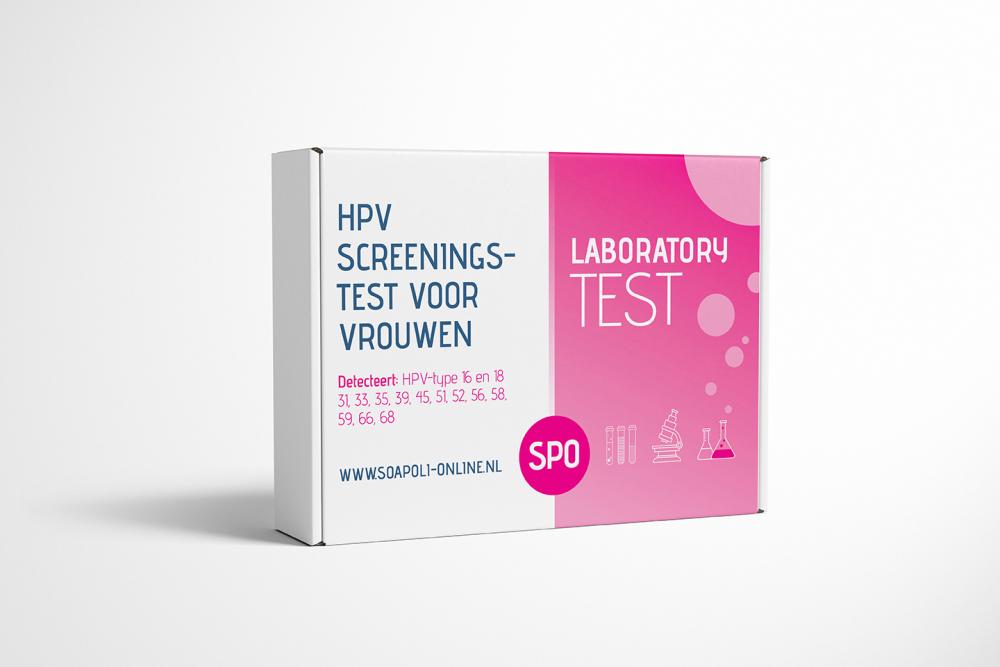
Testing for HPV through Soapoli-online
Most of the time, HPV is nothing to worry about. Would you rather have a grip on your situation, and want to know if you are carrying HPV? We have special HPV tests that you can take at home. You order the test completely anonymously and receive it discreetly packaged at home. Personal advice is available if you need it, and we will guide you if the test indicates that you are carrying the HPV virus. Decide when you want to test yourself with Soapoli-online's reliable HPV test and keep a grip on your sexual health.The advantage of testing at Soapoli-online
√ Results as early as 48 hours after arrival at the ISO-certified lab
√ Complete care: from STI test advice to treatment
√ Ordered before 22:45, shipped today
Frequently Asked Questions
If you get a positive test result, it's wise to make a follow-up appointment with your doctor. You can discuss with your doctor whether further testing or treatment is needed. Don't worry: usually the infection clears itself.
Don't worry, most people who test positive for HPV will never develop cervical cancer. HPV is very common and usually goes away on its own. If necessary, a gynecologist can treat any severely abnormal cells to prevent cervical cancer developing.
Yes, it's possible, but it's not dangerous. If partners only have sex with each other and one partner's body has cleared the HPV virus, that partner's body will recognize a new infection with the same HPV type and immediately render it harmless.
Yes, it can. An HPV infection can be dormant (latent). So someone may have acquired HPV some time ago, but because only a very small amount of HPV is present, it was not found with an HPV test. This latent infection can become active later. Then the virus can be detected. How often this happens is unknown.
Yes, usually your body clears the HPV virus on its own, without the need for medication or treatment. It can take 1 to 2 years for the virus to disappear completely.
Using condoms reduces the chance of transmitting HPV during sex by 70%.You can also protect yourself with an HPV vaccination.